 Reviews



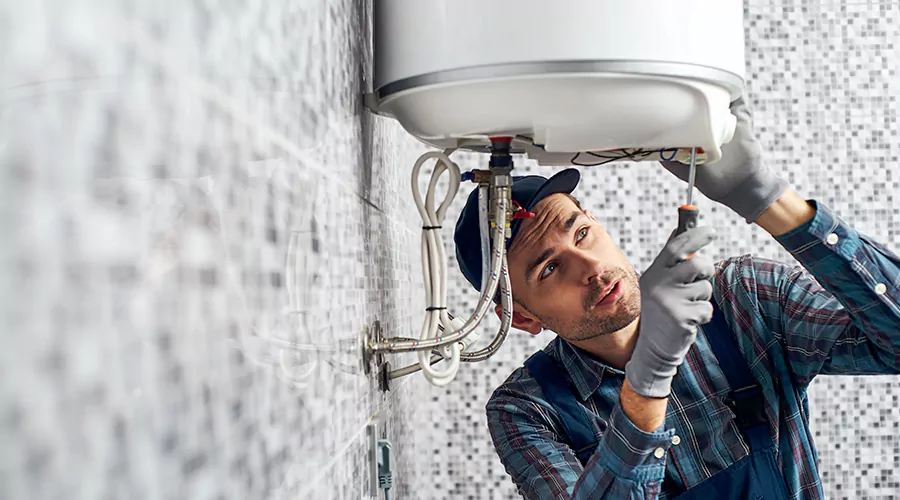
A hot water heater usually leaks because of a damaged plumbing connection or a defective valve. Condensation can also create moisture around certain heaters. A confirmed leak from the storage tank itself is more serious because internal tank failure generally requires replacement. Professional repair averages $616 in the United States in 2026.
Finding water around the heater does not automatically identify the failed component. A leak near the top can travel down the appliance before collecting around its base. The safest approach is to isolate an active leak and determine where the water first appears without dismantling the appliance.
What Are the Main Reasons a Hot Water Heater Leaks?
A hot water heater contains several connections that carry pressurized water. Its design also includes components for draining the storage tank and protecting the appliance against excessive temperature or pressure.
Each component can produce a different leakage pattern.
Common causes include:
- Loose water connections: Water escapes around the inlet or outlet fittings.
- Damaged drain valve: Water drips from the lower drainage connection.
- Relief-valve discharge: The safety system releases water because of an operating problem.
- Defective relief valve: A damaged valve may fail to seal correctly.
- Thermal expansion: Pressure increases as water heats inside a closed plumbing system.
- Internal corrosion: The storage tank deteriorates and begins leaking.
- Condensation: Moisture develops on cooler surfaces during certain operating conditions.
- Nearby plumbing leaks: Water from another connection travels toward the heater.
A.O. Smith advises checking accessible connections and other possible moisture sources before concluding that the storage tank has failed.
How Can You Identify the Source?
The location of the first wet component provides a useful starting point. Begin with a visual inspection rather than dismantling any connections.
| Moisture Location | Possible Source | Main Concern |
|---|---|---|
| Top of heater | Inlet or outlet fitting | Pressurized connection leak |
| Side of heater | Relief-valve connection | Valve or fitting problem |
| Relief discharge pipe | Excessive pressure or faulty valve | Safety-system operation |
| Near drain valve | Damaged lower valve | Continued water loss |
| Bottom of heater | External leak or internal corrosion | Source needs confirmation |
| Cold exterior piping | Condensation | May not be a plumbing leak |
| Near electrical components | Leaking connection or other water source | Electrical safety |
Water found at the base can originate from the top of the heater. Tracing the highest accessible wet point is more useful than assuming that the lowest puddle identifies the leak.
What Should You Do Immediately?
An active heater leak deserves attention because the appliance contains hot water and connects to electricity or gas. Follow the manufacturer's emergency instructions.
When it is safe to do so:
- Keep people away from escaping hot water.
- Avoid touching wet electrical equipment.
- Turn off the heater's energy supply.
- Close the cold-water inlet valve if it is accessible and safe to operate.
- Keep clear of the relief discharge pipe.
- Protect nearby belongings without approaching hazardous water.
- Record the visible source of the leak.
- Arrange further inspection before restarting the appliance.
If the electrical panel is wet or cannot be reached safely, do not attempt to operate it. If you smell gas, leave the area and contact the gas utility or appropriate emergency service.
Rheem provides separate shutdown instructions for the energy supply and incoming water connection.
How Does a Water Heater Leak Progress?
A small connection leak can remain unnoticed while water gradually collects around the appliance. An internal tank leak presents a different concern because the storage vessel itself may have deteriorated.
| Stage | Typical Symptoms | Possible Consequence | 2026 U.S. Cost |
|---|---|---|---|
| Early | Occasional moisture | Connection problem | Minor repair may be possible |
| Developing | Repeated dripping | Water damage | Depends on failed component |
| Active valve leak | Continuous discharge | Pressure or valve issue | Requires diagnosis |
| General repair | Damaged serviceable component | Appliance downtime | 228–1,017 |
| Confirmed tank failure | Water escapes from storage vessel | Replacement | 882–1,825 |
Professional repair averages $616 in 2026. Tank-style replacement averages approximately $1,347. These figures represent different services and should not be treated as interchangeable repair quotations.
What Warning Signs Indicate a Serious Leak?
A developing leak can produce several warning signs before substantial water damage occurs.
Watch for these conditions:
- Water collects repeatedly around the heater.
- Moisture develops around the supply connections.
- The relief discharge pipe releases water repeatedly.
- Water leaks from the drain valve.
- Rust appears around the storage tank.
- The surrounding floor remains wet.
- Water approaches electrical components.
- The heater begins making unusual sounds alongside leakage.
- Hot-water performance changes unexpectedly.
- Water escapes continuously from the appliance.
A leak combined with visible corrosion deserves particular attention. However, rust-colored water or exterior corrosion alone does not prove that the tank is leaking internally.
Why Does Water Leak From the Bottom?
Water found beneath the heater may originate from the drain valve or another external connection. Condensation is another possibility on certain gas storage heaters.
A.O. Smith explains that condensation can occur when relatively cold tank surfaces come into contact with moisture produced during gas combustion. This can create water around the heater during specific operating conditions. However, recurring standing water should never be dismissed as ordinary condensation without checking other sources.
A confirmed internal storage-tank leak generally requires replacement. Household sealants cannot restore the structural integrity of a corroded pressure vessel.
Why Does the Relief Valve Discharge Water?
The temperature-and-pressure relief valve protects the heater against unsafe operating conditions. Repeated discharge can indicate that the water pressure increases excessively when the heater operates. One possible cause is thermal expansion inside a closed plumbing system.
Bradford White explains that heated water expands. When the plumbing system prevents that expansion from moving back toward the main supply, pressure can rise enough to activate the relief valve. A defective valve is another possible explanation. Never cap the discharge pipe or install a plug to stop the water. The cause of the discharge must be identified.
Can Condensation Look Like a Heater Leak?
Yes. Moisture found near a gas storage heater may be condensation rather than water escaping from its plumbing. This is especially relevant during initial heating after installation or when a large volume of cold water enters the tank. Condensation normally depends on operating conditions.
An active plumbing leak may continue even when the heater is not producing heat. However, observation alone does not always distinguish the two conditions. Persistent moisture should be investigated rather than repeatedly wiped away.
Can a Water Heater Leak Affect Hot-Water Performance?
Some water heater problems involve both leakage and reduced performance. For example, a deteriorating storage tank may show corrosion alongside other operating problems. However, insufficient hot water can also result from a faulty heating element or temperature-control problem. A leak and poor heating should therefore be evaluated as separate symptoms until their relationship has been established.
Possible combined warning signs include:
- Repeated water loss.
- Unexplained changes in hot-water availability.
- Visible corrosion.
- Persistent unusual noises.
- Repeated safety-valve discharge.
Avoid increasing the temperature setting in an attempt to compensate for a suspected leak.
How Can You Perform a Safe Visual Inspection?
A homeowner inspection should remain limited to accessible exterior components. Do not remove electrical access covers or dismantle pressurized plumbing.
Use this process:
- Shut down and isolate an actively leaking heater when safe.
- Allow hot surfaces to cool.
- Inspect the accessible inlet and outlet connections.
- Look for moisture around the relief-valve area.
- Observe the discharge pipe from a safe distance.
- Check the drain valve for visible dripping.
- Look for water travelling down the exterior.
- Record any visible corrosion.
- Check nearby plumbing for alternative moisture sources.
This inspection can provide useful information without creating additional risks.
When Should You Call a Professional?
An active leak warrants professional evaluation when its source cannot be safely identified or the problem involves a safety component.
Seek assistance when:
- The storage tank appears to be leaking.
- The relief valve discharges repeatedly.
- Water reaches electrical equipment.
- A gas-related safety concern exists.
- An accessible valve is severely corroded.
- Water continues escaping after supply isolation.
- Nearby building materials are becoming damaged.
A technician can determine whether the problem involves a serviceable external component or a failed tank.
How Can You Prevent Future Leaks?
Regular maintenance helps identify developing problems before they result in major water loss.
Recommended habits include:
- Inspect accessible fittings periodically.
- Follow the manufacturer's tank-flushing schedule.
- Have the anode rod inspected as directed.
- Investigate repeated relief-valve discharge.
- Address excessive water pressure when confirmed.
- Keep the drain valve accessible.
- Monitor visible corrosion.
- Check the area around the heater for unexplained moisture.
A.O. Smith includes anode-rod inspection and appropriate tank maintenance among its recommended care procedures.
Conclusion
If your hot water heater is leaking, begin by identifying where the water first appears. External connections and valves are possible sources. Condensation can also create moisture under certain conditions.
A confirmed internal tank leak is different because the storage vessel generally requires replacement. Shut down an actively leaking heater when it is safe to do so. Persistent relief-valve discharge or moisture near electrical components requires professional attention.
Frequently Asked Questions
Does a leaking hot water heater always need replacement?
No. Some leaks involve replaceable external components. A confirmed structural tank leak generally requires replacement.
Can condensation create a puddle beneath the heater?
Yes. Certain gas storage heaters can produce condensation during specific operating conditions.
Why does my heater leak only while heating?
Thermal expansion or other operating conditions may expose an existing problem.
Can I continue using a heater with a small leak?
An active leak should be evaluated before continued operation, particularly when its source is unknown.
How much does professional water heater repair cost?
Angi reports a 2026 U.S. average of $616, with most projects ranging from $228 to $1,017.